
A Commitment to Curiosity: Kristy Howell, Ed.D. '20
By Lia Kizilbash Gillet
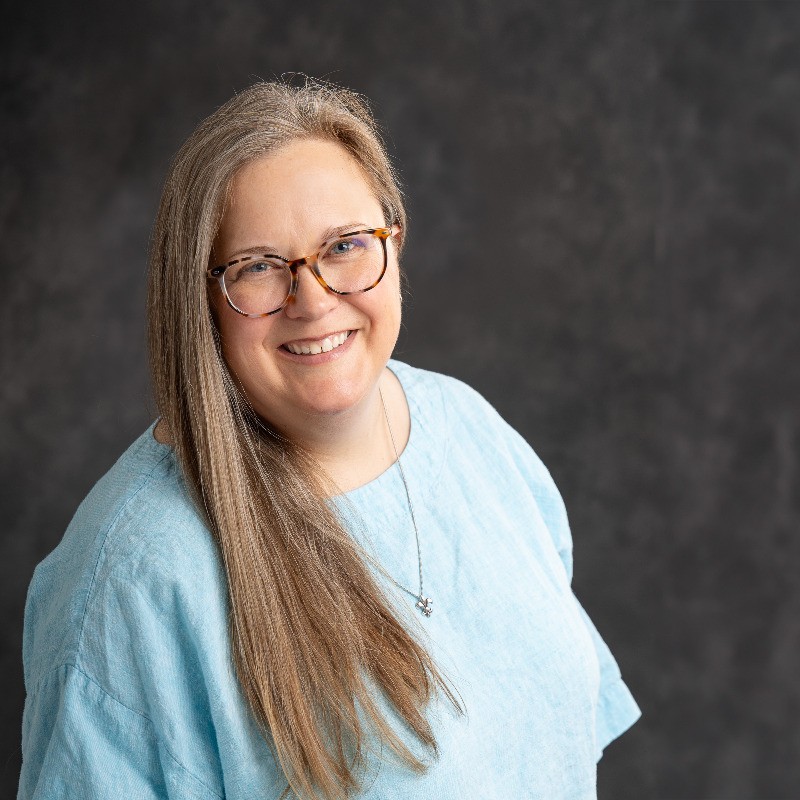
Kristy Howell, Ed.D. '20 (VanderVeen Photography)
For Kristy Howell, Ed.D. ’20, higher education is not a checkpoint — it is a continuum.
From growing up on the campus of Mississippi Gulf Coast Community College to her role as associate director of the Institute for Community and Economic Engagement at the University of North Carolina at Greensboro, her path has been rooted in curiosity.
Howell spent her childhood immersed in campus life while her father, a pianist, served as a faculty member at Mississippi Gulf Coast Community College. He taught courses in music theory, history, composition and piano, bringing both artistry and rigor into the classroom. Known as a tough teacher — much like Howell's mother, an elementary school teacher — they instilled in Howell the belief that the best teachers have incredibly high expectations and an equally high commitment to help students reach them.
Immersed in that environment, classrooms, offices and student spaces were familiar terrain, and the early exposure quietly shaped Howell's understanding of and respect for higher education as both personal and communal.
“I started taking classes and earned my associate's degree there,” she said. “My connection to community colleges truly is lifelong. I discovered their value not only to the students who enroll in them, but also to the communities they serve and to the university and college structures they support. It is a whole-system benefit that profoundly shapes our campuses and communities for the better.”
Howell remained on the Gulf Coast and attended the University of Southern Mississippi, where she earned a bachelor’s degree in history. Earning a study abroad scholarship, she also completed coursework in Austria, England and France.
Over the next two decades after graduation, Howell built a career across the community college landscape, starting in student support and academic affairs before growing into leadership roles that blended sustainability, curriculum development, faculty engagement and student success. At institutions across Kentucky, Illinois and Kansas, she worked closely with adult learners and students navigating complex personal and financial barriers to education.
Teaching eventually became central to her work. As an honors adjunct faculty member at Johnson County Community College in Overland Park, Kansas, Howell co-developed and taught interdisciplinary courses exploring sustainability, equity and cultural understanding, earning her the Lieberman Award from JCCC for teaching excellence, and with her co-teacher, a Portz Grant for Classroom Innovation from the National Collegiate Honors Council.
Despite Howell’s professional success, an academic pull persisted.
“I had begun, but not finished, some master’s work with Dr. Brad Bond while at Southern Miss,” Howell said.
Later, Bond left the University of Southern Mississippi to serve as dean of the graduate school at NIU.
Howell and Bond reconnected and discussed NIU’s Community College Leadership Program. They planned to revisit the conversation for Howell’s possible enrollment in the second cohort. Serendipitously, around the same time, a VP at JCCC suggested she consider a terminal degree, the highest level of education available, in community college leadership.
“It was just the weirdest sort of confluence where I realized, well, actually, I think I'm about to have this conversation with somebody else too,” Howell said. “It was sort of a wicked, delightful, wonderful moment of people that I really trust suggesting that this is the time in my life to do this.”
NIU’s hybrid doctoral program offered Howell something she valued deeply: the ability to pursue rigorous scholarship without stepping away from professional leadership, while remaining intellectually anchored to the community college mission. Although mostly an online program, Howell found connection through summer intensives, consistent mentorship and a culture of collaboration.
In 2020, she defended her dissertation comparing the founding of two Midwestern community colleges, JCCC and the College of DuPage, established in predominantly white areas, exploring how history, culture and diversity shape institutional leadership.
Howell has seen the lasting influence of her NIU degree in her work at UNC Greensboro, where she supports faculty and staff in building ethical, reciprocal partnerships that connect scholarship, teaching and community impact. She has also served as the institute’s director during key periods, contributed to institutional governance and advisory councils, and earned recognition for her leadership.
“NIU connected me to community-engaged scholarship in ways that guide how I support faculty, build meaningful partnerships, and ensure community-based research is thoughtful and non-exploitative,” Howell said.
In recent semesters, Howell returned to the classroom, teaching courses focused on the environment and sustainability. For her, instruction is not separate from leadership; it is one of its most tangible expressions.
NIU also inspired her to complete her previously paused master’s degree in history. She enrolled in an online master's program at Pittsburg State University in Pittsburg, Kansas, the year following her NIU graduation. To complete the degree, Howell wrote a thesis on the history of integration at Mississippi Gulf Coast Community College — the very institution where she grew up — recovering and documenting that story for the first time. The work extended research interests she began exploring during her time at NIU, while bringing her academic journey full circle.
Although Howell questioned her decision to return to school for a fourth time, she ultimately honored her commitment to curiosity.
“Continue to look for different answers to questions and challenge your own beliefs about the world around you,” she said. “And above all, never be afraid to go back to school.”
Help inspire curiosity and innovation; learn more at niuforward.com.